

Spain are the 2026 World Cup champions after edging out Argentina 1-0 in extra time at MetLife Stadium on Sunday, and while the score line was tight, the story of the match was anything but even.
Argentina came into this final playing like a team that knew exactly one plan: absorb, disrupt, survive. And to be fair to them, it nearly worked. But there’s a difference between a disciplined defensive performance and a team that simply refuses to engage with the game in front of them, and for long stretches Argentina looked like the latter. The stat that sums it up best: Argentina didn’t register a single shot in the entire 90 minutes of regulation time. Not one. That’s the first time that’s happened in a World Cup final since Opta started tracking this stuff back in 1966, and only the third instance of any team going shot-less through normal time in 900 World Cup matches. Messi finished with 54 touches and exactly one shot the whole match. When your talisman is that starved of the ball in a final, something has gone badly wrong with the game plan.
What Argentina lacked in attacking intent, though, they made up for in physicality. This was a scrappy, niggling, occasionally ill-tempered game, with Argentina’s players happy to put a foot in and slow the game down whenever Spain threatened to build momentum. Leandro Paredes picked up a needless yellow for shoving Rodri in the back well away from the ball. It was that kind of afternoon — Argentina scrapping for every inch, betting that aggression and organisation could outlast Spain’s technical superiority.
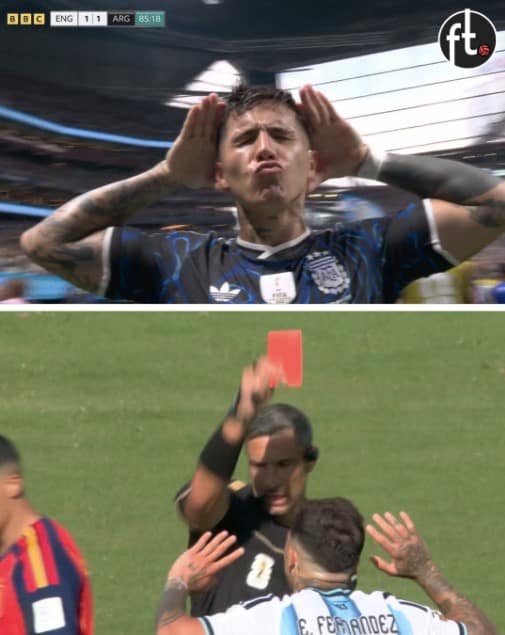
And then it caught up with them. Enzo Fernández had been running hot all game, picking up his first yellow in the 82nd minute for mouthing off at the referee over a non-call — the kind of theatrics that feel harmless right up until they aren’t. Ten minutes later, in stoppage time, he came flying through the back of Pau Cubarsí on a challenge that sent the young Spanish defender cartwheeling through the air. Second yellow, straight red, and suddenly Argentina were staring down 30 minutes of extra time with ten men against a Spanish side that had been probing all match for exactly this kind of opening. All that earlier posturing and jawing at officials didn’t just fail to intimidate anyone — it left him one bad decision away from a sending-off, and he duly obliged at the worst possible moment.
Argentina held on for a while even a man light, and Emiliano Martínez was magnificent doing it — 11 saves, the most ever recorded in a men’s World Cup final. But something had to give eventually, and in the second period of extra time it did: substitute Ferran Torres pounced on a loose ball and finished sharply past Martínez to win it. Fittingly, Argentina only found their attacking spark once the game was already lost, finally forcing a couple of half-chances in the closing minutes that never really threatened an equaliser.
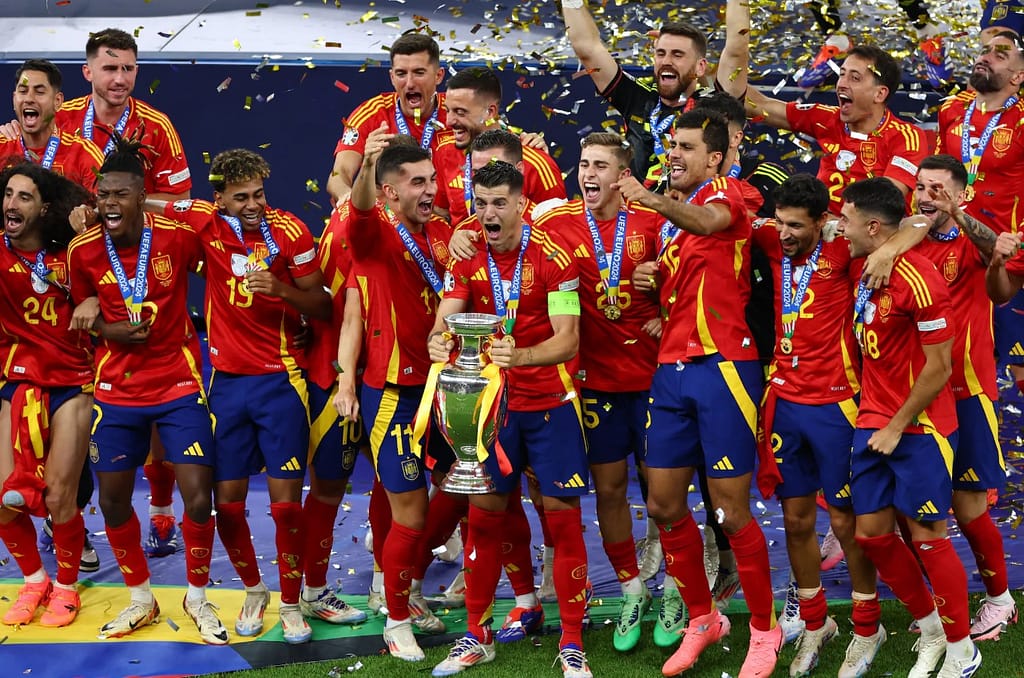
Credit where it’s due — Spain were relentless, patient, and thoroughly deserving winners, claiming their second World Cup title and capping off a 38-match unbeaten run that now includes a Euros and a World Cup. But Argentina will look back on this final knowing they made this harder on themselves than it needed to be. A team with more discipline and more ambition going forward might have made Spain sweat for it. Instead, they mostly made it easy.